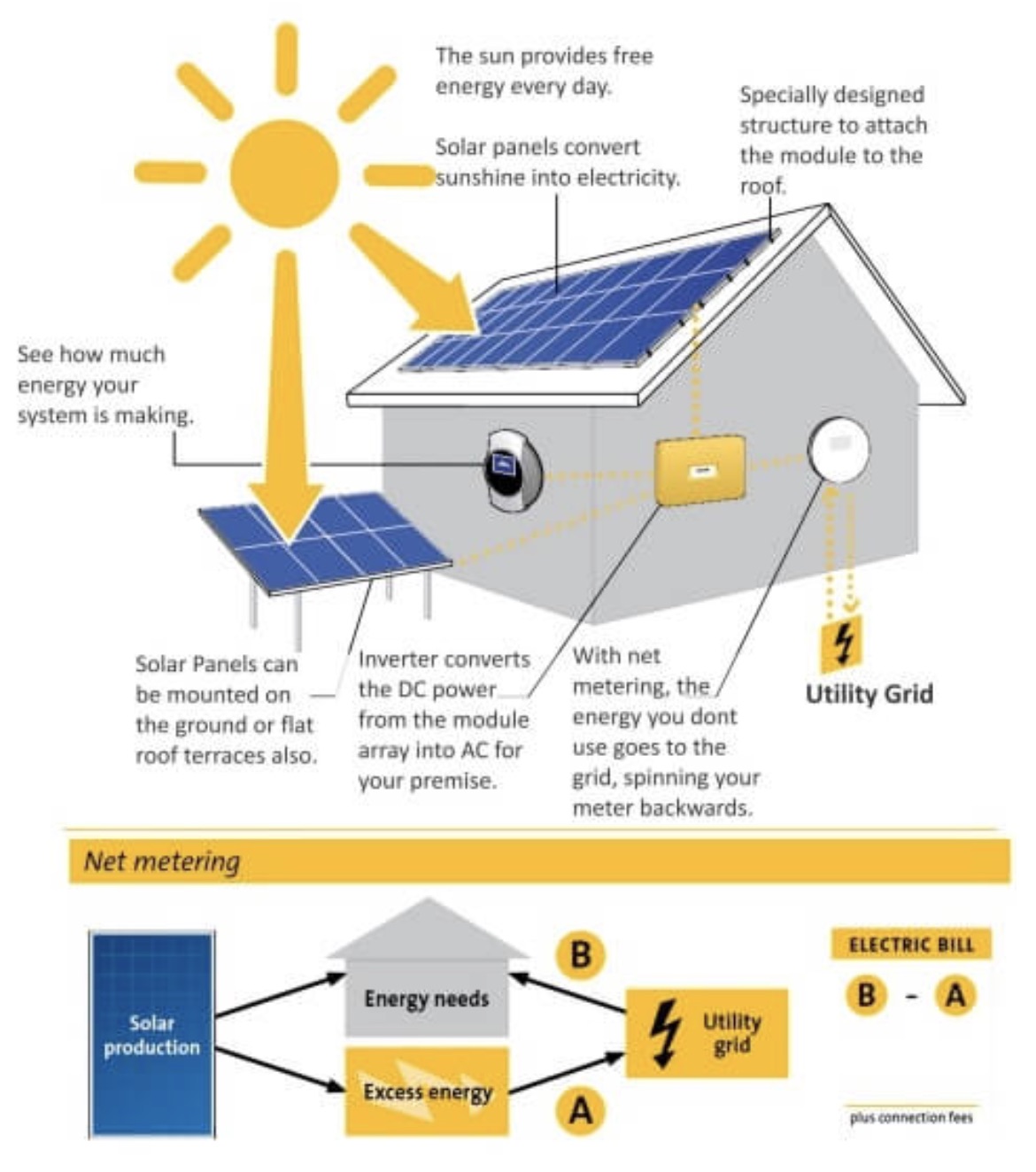
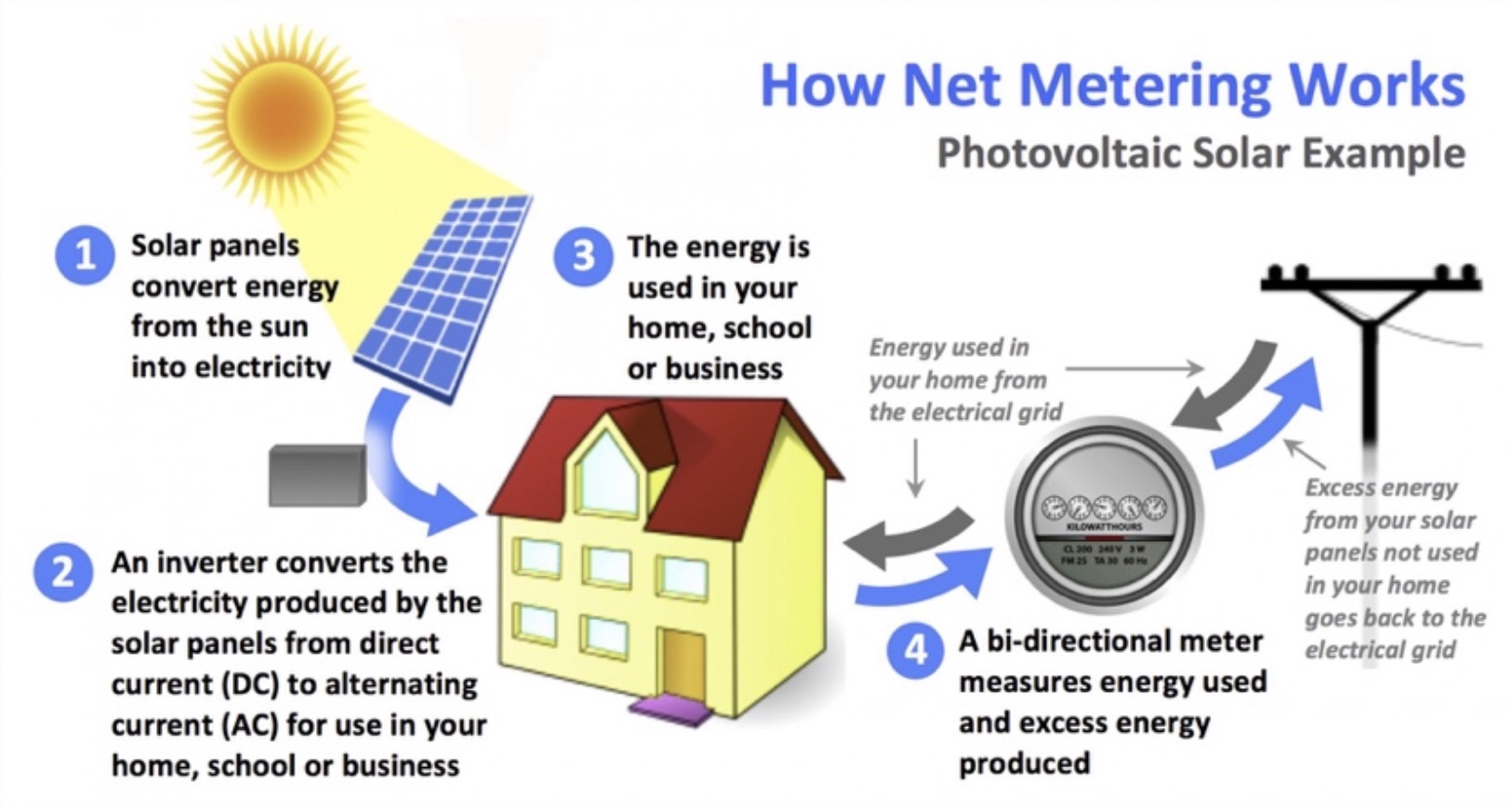
- The sun shines on the solar panels generating DC electricity
- The DC electricity is fed into a solar inverter that converts it to 240V 50Hz AC electricity.
- The 240V AC electricity is used to power appliances in your home.
- Surplus electricity is fed back into the PREPA grid.
- Whenever the sun shines (and even in overcast weather), the solar cells generate electricity. The grid connect inverter converts the DC electricity produced by the solar panels into 240V AC electricity, which can then be used by the property/household.
If your solar system produces more power than your property consumes, the surplus is fed back into PREPA's power grid. PREPA will measure this "contribution" and will offset it against energy you consume by providing a credit on your bill. How much PREPA pays is determined by PREPA's feed-in tariff.
When the solar cells are not producing power, for example at night, power comes from either your backup batteries or from the PREPA power grid.
As all components in a system have no moving parts, you can expect a long, hassle free life from your solar power system!
The good news for solar panel installation: it is a fairly convenient, hands-off home renovation that requires very little preparation on your part. Almost everything will be handled by EsLa’s Installation Team.
In order to make your installation as pain-free and perfect as possible, we suggest keeping the following in mind:
- Work with your contractor to make sure your roof is free of obstructions before installation day. This might include pruning tree limbs or relocating your satellite dish.
- Solar panel installation can be noisy, so consider how the sounds of hammering will impact your daily routine. For example, small children or pets might be more comfortable staying with family during installation.
- Make extra space in your yard and driveway for the installation team. Remove decorations and outdoor furniture from the vicinity to allow room for scaffolding. You should also relocate your vehicles, so construction crews can park as close to your home as possible.
Solar panel installation can be a long journey, but it’s one that ends with a significant increase in personal savings, self reliance, energy resiliency and environmental benefits.
Once we have finalized your system design and have all the required permits and approvals, it’s time to install your system! Our crews are experienced with solar installations and most can be completed in one day. The process is as follows:
Step 1 - Crew Arrival & Introduction:
When our team arrives, they will find you and introduce themselves. We want to make sure you know the people swinging the hammers. They’ll explain the process and identify where they will be working and parking.
Step 2 – System Design Review:
The foremanwill review your personalized system design, explain the layout of the array, identify the equipment used and where it will be located.
Step 3 - System Installation:
Your solar system-consisting of the solar panels, racking, invertersand wiring-will be installed on your roof. If you purchased a battery for storage and back-up power, it will be installed indoors, on a lower floor as specified in the System Design.
Step 4 -Clean Up:
Like good Boy Scouts, we will leave your property as clean, if not cleaner, then when we arrived. If this doesn’t happen, please let us know!Step 5 -Final InspectionBefore the team leaves, the foreman will show you the new system, explain how it works and show you how to turn it on.A kilowatt-hour is the metric used to measure electricity usage. It represents the electricity used by 1 kilowatt (equal to 1000 watts) of power consumption (e.g. the approximate power draw of a microwave) for one hour.
Net metering allows residential customers who generate their own electricity from solar power to sell the electricity they aren’t using back into the grid.
Net metering is a billing mechanism that credits solar energy system owners for the electricity they add to the grid. For example, the solar system on your roof may generate more electricity than your home consumes during daylight hours. If yourhome is net-metered, the electricity meter will run backwards to provide a credit against what electricity is consumed at night or other periods when the home’s electricity use exceeds the system’s output. Customers are only billed for their “net”energy use. On average, only 20-40% of a solar energy system’s output ever goes into the grid, and this exported solar electricity serves nearby customers’loads.